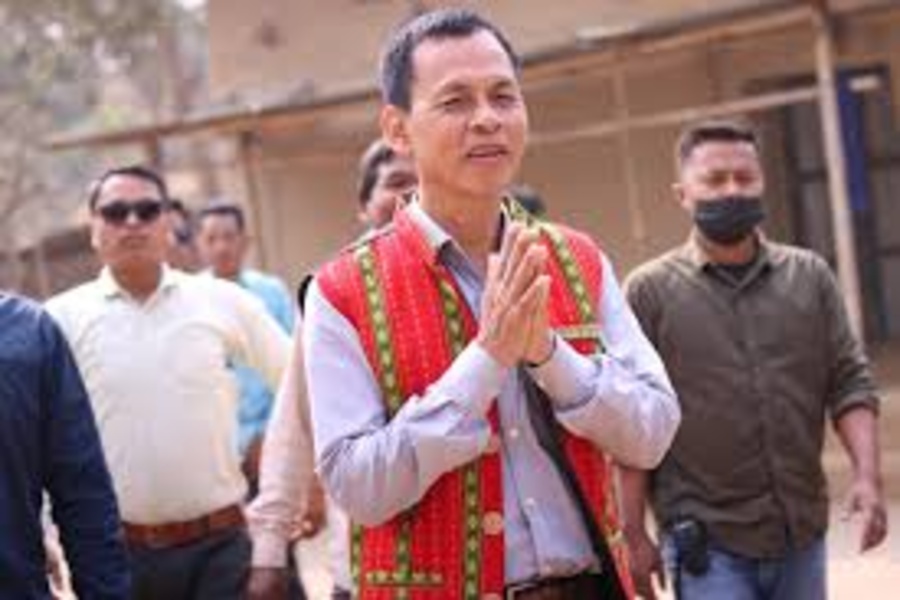
Tipra Motha Party MLA Ranjit Debbarma has strongly criticized Tripura Chief Minister Dr. Manik Saha for what he described as the government's silence on several crucial issues affecting the state.
Referring to the 73rd Plenary Session of the North Eastern Council (NEC), Debbarma praised Meghalaya Chief Minister Conrad K. Sangma for taking an active stand on the Inner Line Permit (ILP) issue. He noted that Sangma submitted a memorandum to Union Home Minister Amit Shah seeking the repeal of the ILP system, which, according to Debbarma, reflects the Meghalaya government's commitment to protecting the interests of its people.
In contrast, Debbarma alleged that Chief Minister Dr. Manik Saha has remained silent on several matters of vital importance to Tripura. He claimed that the Chief Minister has not publicly addressed sensitive issues such as illegal infiltration from Bangladesh, despite growing concerns among the people.
The Tipra Motha legislator further stated that there has been little visible progress on long-standing demands, including the implementation of ILP in Tripura, the promotion and development of indigenous languages, and the overall development of the Tripura Tribal Areas Autonomous District Council (TTAADC).
Debbarma also expressed concern over the proposed 125 amendment bills aimed at granting greater powers to the TTAADC. He alleged that the Chief Minister has not provided any clear commitment regarding these proposals. According to him, there has also been no significant response from the Chief Minister on these matters through social media or other public platforms.
He argued that while leaders from other northeastern states actively advocate for their states' interests at the national level, Tripura's leadership has failed to adequately highlight and address the core concerns of the indigenous tribal population.
Calling for urgent action, Debbarma urged the state government to take a more proactive and firm approach toward safeguarding the interests of the TTAADC region, preventing illegal infiltration, and addressing the long-pending demands of indigenous communities. He emphasized that these issues are closely linked to the social and political stability of the state.