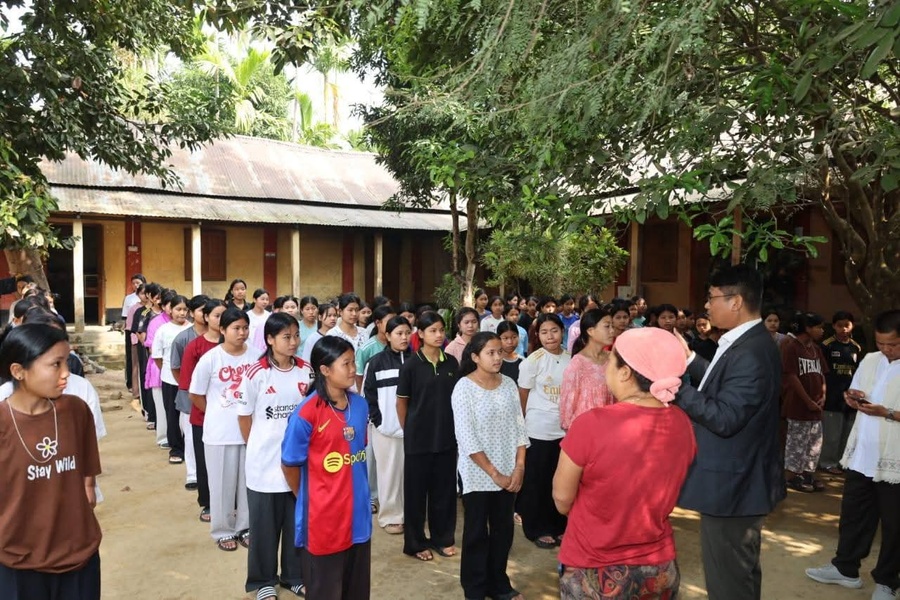
Tribal Welfare Minister Bikash Debbarma paid a surprise visit to the Damchhara Tribal Girls’ Hostel on Sunday morning, underscoring the government’s emphasis on strengthening educational facilities for tribal students in Tripura.
Arriving at around 10 a.m. without prior notice or formal arrangements, the Tribal Welfare Minister carried out a spot inspection of the hostel’s infrastructure and interacted directly with the residents. He highlighted that meaningful education extends beyond classroom instruction and textbooks. According to him, proper infrastructure, disciplined hostel administration, and nutritious meals are equally vital to a student’s development.
During the visit, officials briefed him on the ongoing construction of two modern hostels, each designed to accommodate 100 boys and 100 girls. Debbarma noted that a positive and well-maintained academic environment is crucial for helping students stay focused on their goals. Without a supportive atmosphere, he said, students may lose concentration and struggle to realize their ambitions, making infrastructure development a top priority.
In a gesture that went beyond a routine inspection, the minister joined the students for breakfast in the dining hall, sharing a simple meal of dal, rice, and vegetables to personally evaluate the food quality. Observers said he engaged warmly with the students, interacting with them informally.
Speaking about food provisions, Debbarma contrasted the current administration with the previous government led by the Communist Party of India (Marxist), which governed Tripura for 35 years. He claimed that during that period, hostel students received a daily food allowance of Rs 40–45. Under the present Bharatiya Janata Party-led government, he said, the allocation has been increased to Rs 100 per day.
He further emphasized that education plays a key role in empowering tribal students and raising awareness of their rights. At the same time, he stressed that education should remain free from political influence, stating that it must serve all sections of society without division.