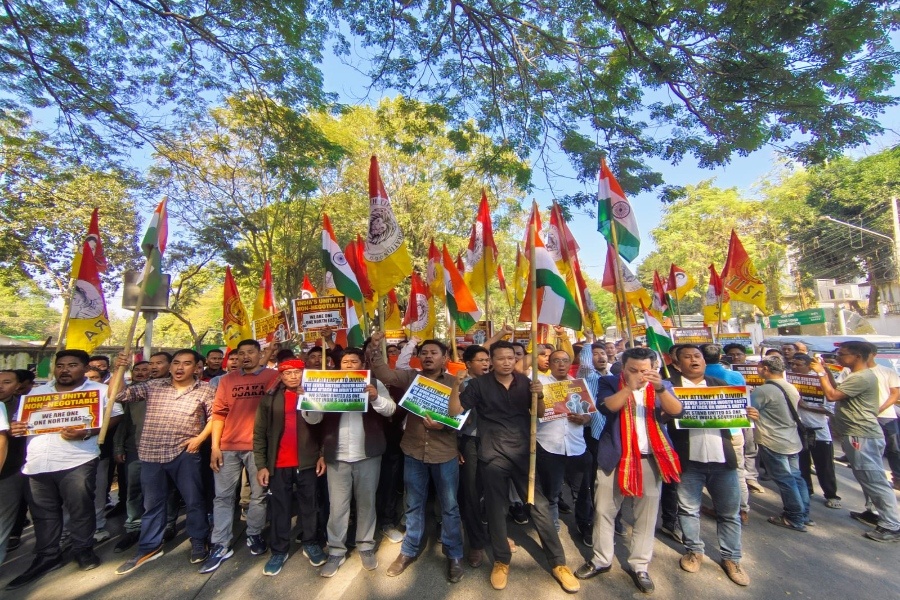
The Youth Tipra Federation (YTF), the youth wing of the Tipra Motha Party, organised a demonstration on Friday outside the office of the Assistant High Commissioner of Bangladesh in Agartala, protesting alleged anti-India remarks made by a Bangladeshi political leader.
The protest was held in response to statements attributed to Hasnat Abdullah, a leader of Bangladesh’s National Citizen Party, which YTF members claimed were directed against India and the Northeast region. Demonstrators raised slogans criticising Bangladesh’s interim leadership and expressed concern over what they described as increasingly hostile rhetoric.
YTF President Suraj Debbarma said the protest reflected public sentiment rather than any formal political demand. He alleged that Hasnat Abdullah, while speaking near the Indian High Commission in Bangladesh, made remarks that threatened Indian interests.
“From in front of the Assistant High Commissioner’s office, we want to send a clear message,” Debbarma said, referring to India’s historical role in the formation of Bangladesh. He stated that despite India’s support during Bangladesh’s independence, recent statements by certain leaders were portraying India as an adversary.
Debbarma further claimed that repeated comments about capturing India’s Northeast had caused unrest among local communities. Making a strong symbolic remark, he said that continued provocation could lead to intensified resistance from people of the region.
He warned that if the Indian government fails to adequately assess the situation, citizens may demand stronger measures to safeguard territorial integrity. “As responsible citizens of India, we are prepared to protect our land and will not remain silent,” he said.
The YTF president also expressed apprehension about potential instability in Bangladesh ahead of upcoming elections, alleging external influence over the country’s interim administration.
The protest concluded peacefully, with YTF leaders urging authorities on both sides to maintain restraint and uphold diplomatic norms.