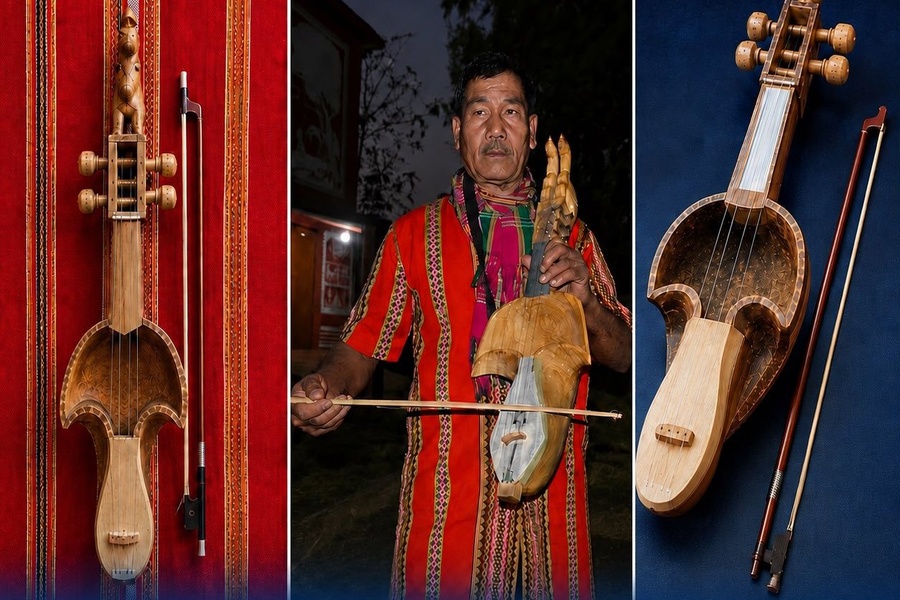
In a landmark achievement for Tripura’s cultural heritage, the traditional Tripura Sarinda, an indigenous stringed musical instrument deeply rooted in the state’s folk traditions, has been granted Geographical Indication (GI) status.
Announcing the development, Tripura Chief Minister Dr Manik Saha described the recognition as a matter of immense pride for the state. He said the GI tag for the Tripura Sarinda represents a significant step toward preserving and promoting the rich cultural traditions of Tripura while ensuring wider recognition for its unique folk art forms.
The Chief Minister noted that the GI certification will help safeguard the authenticity of the instrument and support efforts to preserve the centuries-old musical heritage associated with it. He added that the recognition would also contribute to enhancing awareness of Tripura’s indigenous cultural identity across the country and beyond.
With the inclusion of the Tripura Sarinda, the number of GI-tagged products from the state has risen to four. The other products that have earned the prestigious recognition are Tripura Queen Pineapple, Risha/Pachra (Rignai), and Matabari Peda, each representing a distinct aspect of the state’s cultural and traditional wealth.
Extending his congratulations to the artisans, instrument makers, and musicians who have kept the tradition alive, Dr. Saha acknowledged their invaluable contribution to preserving Tripura’s folk heritage for future generations.
Experts believe that the GI tag will not only provide legal protection to the traditional instrument but also create new opportunities for local craftsmen and cultural practitioners. The recognition is expected to boost the promotion of Tripura’s traditional arts and further strengthen the state’s cultural footprint at both national and international levels.
A cherished symbol of Tripura’s indigenous musical tradition, the Sarinda continues to play an important role in folk performances and cultural gatherings. The GI status is expected to encourage its continued production, preservation, and transmission to future generations.