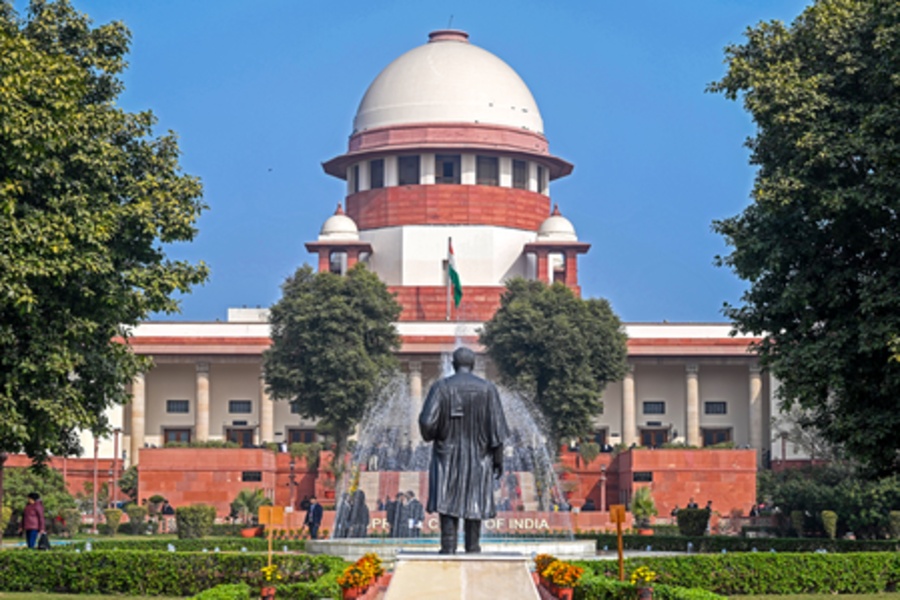
The Supreme Court on Monday issued notices to the Union Government, the National Commission for Protection of Child Rights (NCPCR), and the National Human Rights Commission (NHRC) on a Public Interest Litigation (PIL) demanding a complete prohibition on the employment or engagement of minors in orchestras, dance troupes, massage centres, spas, salons, and related establishments.
A bench led by Chief Justice Surya Kant, along with Justices Joymalya Bagchi and Vipul Pancholi, described the matter as “serious” while seeking responses from the Ministries of Labour and Employment, Law and Justice, and the concerned statutory bodies.
The petition argues that the Child and Adolescent Labour (Prohibition and Regulation) Act, 1986 does not explicitly classify such venues under hazardous occupations in its Schedule. According to the plea, this omission has created a regulatory gap that allows exploitative practices to persist under the cover of entertainment and wellness services.
The NGO behind the PIL has urged the Centre to amend the law to explicitly ban the involvement of children below 18 years in such activities, particularly in orchestras, dance bars, nautanki performances, spas, and salons. It has also sought the creation of a standard operating procedure (SOP) for the identification, rescue, and rehabilitation of affected minors.
The plea further alleges that vulnerable children, especially from economically weaker backgrounds, are often deceived with promises of work, education, or marriage prospects, and later subjected to coercion and exploitation. It claims that trafficking networks use these establishments as fronts for forced labour and sexual abuse.
Citing rescue operations conducted between March 2025 and May 2026 across several states including Bihar, West Bengal, Rajasthan, and Delhi, the petition states that over 200 minors were rescued from orchestras and a smaller number from spas and massage parlours. Many of these children are said to have been trafficked from states such as Jharkhand, Uttar Pradesh, Assam, Chhattisgarh, and even from Nepal.
The NGO also highlighted that similar concerns have previously been taken up by the Patna High Court, which had sought the Bihar government’s response on restricting minors’ participation in orchestra and dance groups.