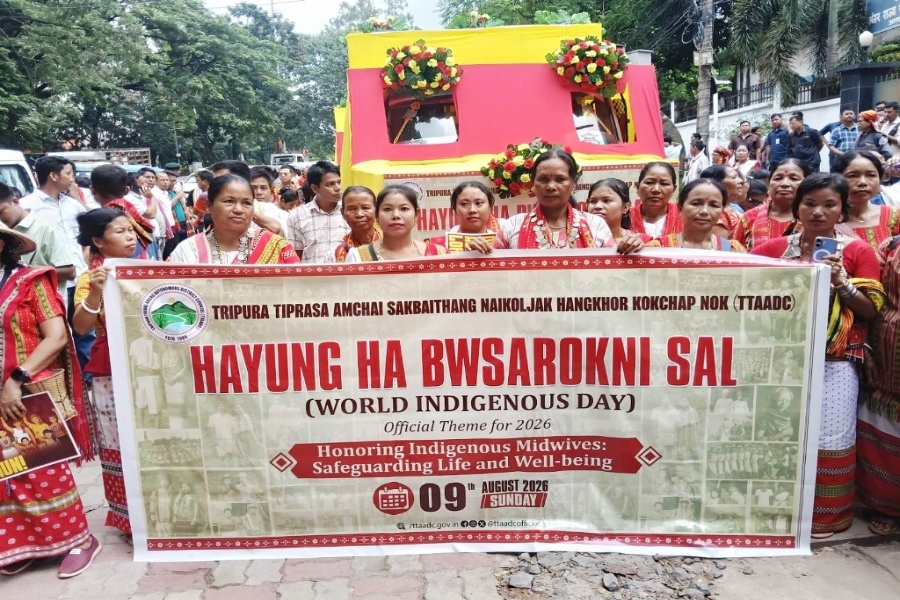
A debate over representation, recognition and inclusivity within indigenous society erupted on social media in Tripura on Sunday, coinciding with the observance of the International Day of the World’s Indigenous Peoples.
The exchange involved former MLA and present Member of the District Council of the Tripura Tribal Areas Autonomous District Council (TTAADC) Rajesh Debbarma, who was also the convener of the programme, and Dr. Sunil Kalai, an academician, filmmaker, writer and cultural activist.
The discussion began after Kalai raised concerns on social media over what he described as the neglect of sections of indigenous society in the absence of the Maharaja. He argued that indigenous programmes should provide space not only to elected representatives and community leaders but also to academicians, scholars, journalists, indigenous media organisations, filmmakers, writers, social activists and cultural practitioners.
“In Maharaja’s absence, no leader remember us,” Kalai wrote, adding that people from different sections of society needed recognition and space.
Responding to the post, Debbarma said, “No one neglects you. All are cordially invited to attend today’s event.” He later stated that heads of Tiprasa communities, including Kalai, had been invited and had attended the programme.
Kalai, however, argued that the issue was broader than an individual invitation. He questioned whether academicians actively working on indigenous issues, along with filmmakers, journalists, activists and other cultural practitioners, had been included.
“But you excluded the academicians,” Kalai said, questioning whether any serving academician working in the field had been included in the programme. He also referred to indigenous media organisations, Kokborok news channels and people involved in documenting indigenous history, language and culture.
Kalai maintained that his concerns were not about personal recognition but about a wider section of indigenous society whose contributions, he claimed, often remain overlooked. He argued that public programmes organised around indigenous issues should acknowledge contributions from different fields.
The exchange later became more political, with Kalai questioning whether elected representatives should be the primary face of indigenous society and criticising the political conduct of leaders. His political allegations were not independently verified.
The debate has since evolved into a wider discussion over whether indigenous representation should extend beyond political leadership.
With the International Day of the World’s Indigenous Peoples being observed globally on Sunday, the discussion has highlighted calls for greater participation of academicians, media professionals, filmmakers, writers, activists, cultural workers and youth alongside political and community representatives in programmes concerning indigenous society.