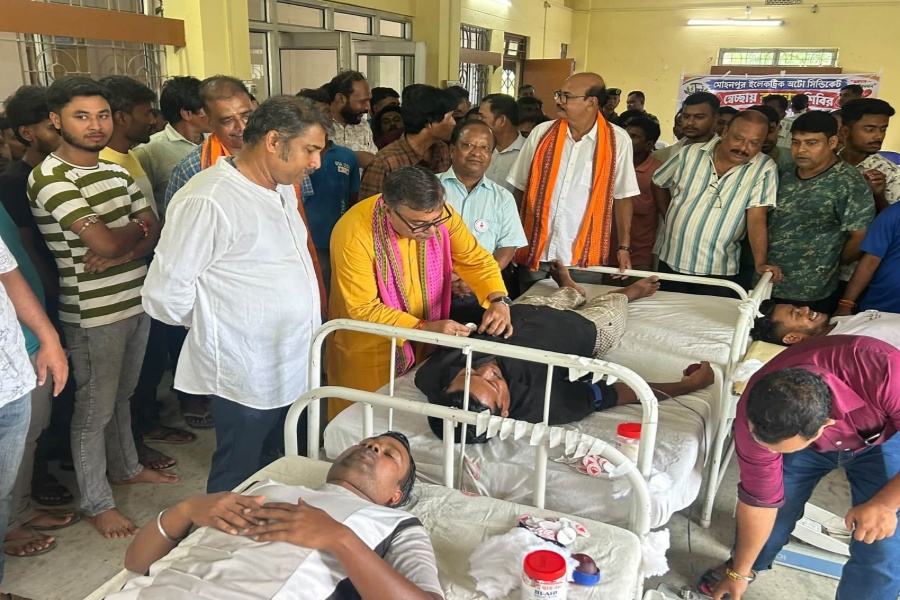
Emphasising the importance of voluntary blood donation, Power Minister Ratan Lal Nath on Wednesday said that donating blood is one of the greatest forms of humanitarian service as it can directly help save a person’s life.
The minister was speaking after participating in a blood donation camp organised by the Mohanpur Electric Rickshaw Workers’ Association, at Mohanpur.
Appreciating the initiative, he said blood donation transcends barriers of religion, caste and community and plays an important role in strengthening social harmony.
“The government can provide funds and facilities, but it cannot donate blood. Only people can come forward and give blood to one another,” the minister said.
He also urged citizens to participate more actively in voluntary blood donation camps.
Minister informed that the Tripura requires around 50,000 units of blood every year, while collections generally remain around 42,000 to 45,000 units, highlighting the need for greater public participation.
The minister praised the Electric Rickshaw Workers’ Association for taking the initiative and urged other organisations and individuals to undertake similar activities.
He extended his greetings and congratulations to all those involved in the blood donation drive.
Later, the minister participated in an eye camp organised by the Rotary Club of Aspiring Agartala branch at Mohanpur 12th Grade School.
The camp provided free eye examinations to school students as well as members of the local community. Free spectacles and medicines were also distributed to beneficiaries based on their requirements.
Describing the initiative as a commendable humanitarian effort, the minister said such programmes help bring essential healthcare services closer to people, particularly those who may face difficulties accessing medical facilities.
He expressed his gratitude to the office-bearers and members of the Rotary Club of Aspiring Agartala branch for organising the camp and conveyed his best wishes for their continued efforts in serving the community.
The minister said initiatives involving blood donation, eye care and other community services demonstrate the importance of collective participation in building a healthier and more compassionate society.