Tripura is on track to achieve self-reliance in potato and potato seeds by 2030, with the Agriculture and Farmers’ Welfare Department implementing a series of measures, including a landmark agreement with the International Potato Centre (CIP), Peru.
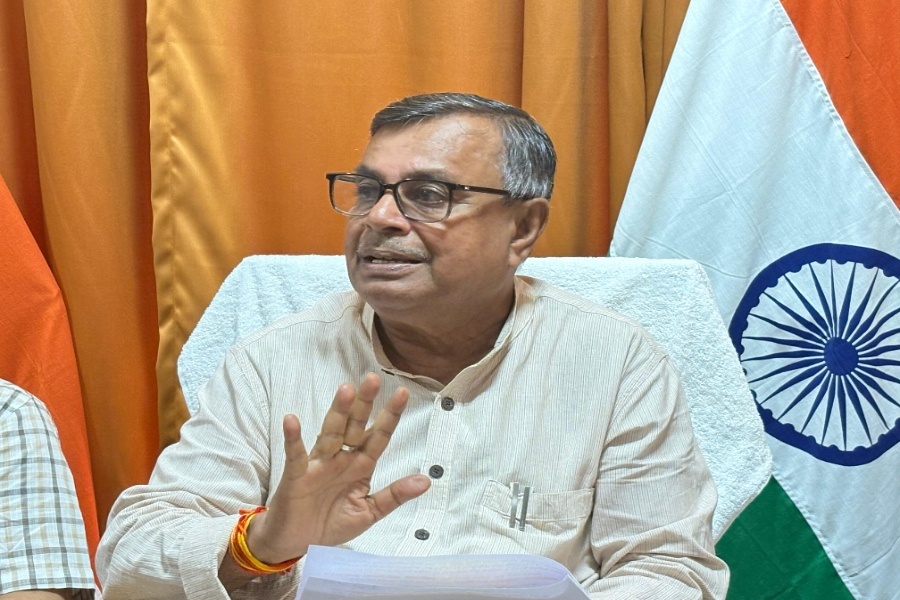
Agriculture and Farmers’ Welfare Minister Ratan Lal Nath announced this after chairing a meeting with CIP Director General Simon Heck and Country Manager Niroj Sharma.
According to the minister, Tripura currently has 23,746 potato farmers cultivating the crop across 47,637 kani (around 7,622 hectares) of land. Earlier, the average yield per hectare stood at 19.16 MT.
“Until recently, farmers relied on stored potatoes or seeds sourced from West Bengal, Punjab, or Agartala’s Gol Bazar. The quality was unreliable, and yields remained low. Although True Potato Seeds (TPS) were introduced, their high cost and dependence on skilled manpower limited large-scale adoption. Without the Nagicherra research centre, production would have been negligible,” Nath explained.
Highlighting recent progress, the minister said Tripura now produces 1.46 lakh MT of potatoes annually against a demand of 1.55 lakh MT. To address the shortfall, the state introduced the Epical Rooted Cutting (ERC) method in 2022-23 with ?5 crore support under the Rashtriya Krishi Bima Yojana (RKBY).
“We partnered with CIP for technology support, capacity building, certification assistance, and the establishment of a potato chips processing centre. In 2023, we distributed seeds and saplings to 104 farmers, in 2024 to 402 farmers, and this year 4,000 farmers will benefit under ERC,” Nath said.
He added that Tripura has now achieved a record yield of 62.5 MT per hectare — over three times the previous best — with CIP Director General Simon Heck calling it unprecedented.
The minister further announced that the state will be self-sufficient in potato seeds by FY 2028-29 and fully self-reliant in potato production by 2029-30.
“Once that milestone is achieved, Tripura will not only meet its own demand but also export potatoes to other regions,” Nath stated.