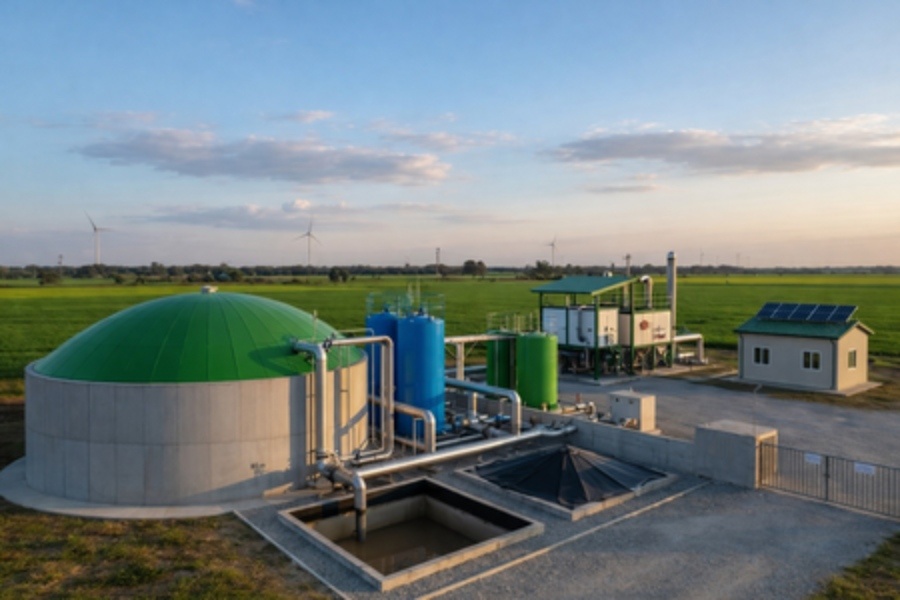
The Union Cabinet, chaired by Prime Minister Narendra Modi, on Thursday approved the GOBARdhan – National Circular Bioenergy Scheme with a financial outlay of Rs 23,731 crore, aimed at strengthening India’s biogas ecosystem, promoting clean energy production and creating new opportunities for farmers.
The scheme, which will be implemented from FY 2026-27 to FY 2035-36, seeks to establish Compressed Biogas (CBG) as an important component of India’s energy strategy. It aims to significantly increase domestic CBG production, attract private investment and promote a circular bioeconomy by converting organic waste into valuable energy resources.
Under the initiative, a dedicated CBG Offtake Assurance Framework will be introduced to provide producers with a stable and predictable market. City Gas Distribution companies will procure CBG in line with the government’s blending targets, which include 3 per cent in FY27, 4 per cent in FY28 and 5 per cent from FY29 onwards for the CNG transport and domestic PNG sectors.
The government said the framework would provide long-term demand visibility, improve project viability and encourage greater participation from private investors.
The scheme also includes a fixed pricing mechanism for CBG at Rs 2,110 per Metric Million British Thermal Unit (MMBTU), offering producers revenue stability while ensuring affordability for consumers. The pricing support will remain in place for a minimum period of 10 years to encourage investment and expansion of CBG projects.
Eligible new CBG projects will receive capital assistance of up to Rs 2 crore per tonne per day (TPD) of installed capacity. The financial support will cover not only plant equipment but also important components such as feedstock collection, organic manure processing and value-addition facilities. Existing projects expanding their capacity will also be eligible for assistance.
The scheme will promote the development of pipeline networks connecting CBG plants with trunk pipelines and City Gas Distribution systems, helping reduce transportation costs, improve supply efficiency and expand market access.
To improve financing opportunities, the government will establish a Credit Guarantee mechanism for eligible MSME-based CBG projects. The initiative is expected to increase lender confidence, reduce financial barriers and accelerate the development of new projects.
Additionally, the scheme will create a dedicated CBG Ecosystem Challenge Fund to support district-level implementation and strengthen local supply chains.
Managed by the Ministry of Petroleum and Natural Gas, the GOBARdhan scheme aims to bring together various elements of the CBG value chain on a single platform, supporting farmers, generating employment and advancing India’s clean energy transition.