
Investing eventually comes down to "trust". When a regular person walks into a bank, runs into an insurance agent, or approaches a finance expert for guidance on how to invest their hard-earned money, they are not necessarily looking for another financial product. The person is placing their trust in someone who is purportedly more knowledgeable and experienced. Investment ethics play a crucial role in this situation.
But the line between financial guidance and financial selling is increasingly blurring in today's competitive financial world. Banks no longer restrict themselves to banking products. Together with Savings Accounts and Fixed Deposits and Recurring Deposits, banks are now selling insurance policies and various other third-party financial products. Insurance firms are selling products that incorporate savings, investment or both with protection. Agents and intermediaries are also engaged in business targets, commission and business incentives There is nothing wrong in these activities. Banks are commercial institutions; insurance is an integral component of financial planning; and agents and intermediaries are entitled to remuneration for services rendered. The issue arises when a seller's financial interest begins to weigh more heavily than the customer's actual need.
The issue is relevant because commissions on some life-insurance products could be considerably high and, depending on the product, commissions on first-year premiums have reached levels of about 35% of premium, historically, on some products. There is little or no remuneration in recommending a simple deposit or a Post Office scheme, a conflict between appropriate product recommendation and sales incentives naturally arises The existence of commission is not unethical. An insurance agent spends his time in acquiring the customer, explaining the product, filling in documents, servicing policies etc and is legitimately entitled to receive remuneration for these activities. The ethical consideration lies in seeing whether the remuneration that attachs to a particular product is allowed to influence the advice to the customer.
An individual may have accumulated a sum of ₹5 lakh or ₹10 lakh over the years, may simply seek capital safety with a reasonable and reasonably predictable return. Another may need regular monthly income. A senior citizen may be relying on investments for his or her day-to-day spending; whereas a young professional may be searching for long-term wealth creation. Some other individual may indeed need life-insurance protection. These customers cannot be advised in the same way. An ethical adviser should therefore start by understanding the objective of the customer, his or her age, financial position, liquidity needs, investment time horizon, risk profile and existing level of insurance protection. Only after these are understood should a financial product be advised for the customer. Product should follow the need, should never be made to follow the product.
The principle gains even more significance because banks now sell a third-party insurance product too, though they have their own conventional deposit products. Bancassurance has certainly helped widen the net of insurance, has made it possible for a much larger population to have financial protection through insurance. It is a legitimate and an important business activity. But when a customer seeks principally a safe investment, ethical financial advice must ensure that conventional deposit products and other suitable options are given a reasonable comparison before an insurance linked product is recommended. This becomes particularly significant when the range of government-backed small-saving schemes made available through Post Offices is taken into account.
At the rates applicable referred to here, the Post Office Monthly Income Scheme (MIS) carries 7.4% per annum. For senior citizens within the eligible limit, the Senior Citizens Savings Scheme carry’s 8.2% per annum. The Public Provident Fund (PPF) carries 7.1% per annum. The National Savings Time Deposit Accounts carry rates ranging from 6.9% to 7.5% depending on the tenure. KisanVikasPatra (KVP) carries 7.5% per annum. All these rates are secured, are much higher than other traditional investment schemes. These rates illustrate the variety of relatively straightforward savings options available to ordinary investors. Every scheme has its own conditions of eligibility for benefits and applicable rates may be revised from time to time by the Government The point is not that Post Office schemes are invariably superior to bank deposits, insurance products and market-linked investments. There is no one single financial product that could be the best for every investor. The key ethical consideration is relevant alternatives should be part of the financial dialogue before a decision is taken by the customer.
The adviser, who is genuinely thinking of the interest of the customer first, should be willing to explain such alternatives even in the absence of commission or direct financial benefit from doing so. Insurance agents often highlight the amount payable to the family in case of the policyholder's passing away. Customers may also be shown a lot of money to come in after ten years, or fifteen, or twenty. The mix of “insurance plus investment” or of “protection plus saving” naturally sounds appealing. These advantages may be genuine and valuable. Protection through insurance is itself extremely valuable. However, when such a product is also be being sold as an investment, the true return on the investment should be given equal prominence.
If the customer contributes ₹1 lakh every year, for ten years, and receives more than that many years later, simply taking total contribution versus the eventual maturity amount will not be an adequate indicator of investment performance. Money has a time value. The customer should be aware of the amount he or she invested, the period of investment, insurance protection, the guaranteed benefits, the non-guaranteed benefits, surrender conditions and, wherever relevant, the effective annualised return or Internal Rate of Return (IRR). A customer who needs significant life protection certainly should be directed towards the appropriate insurance. A customer who already has sufficient insurance protection and is seeking principally regular income or capital preservation may have an entirely different requirement. It may not be the best financial guidance to advise another insurance-linked product simply because it creates business. Banks have a particularly significant role to play because they have a unique position of public trust. An insurance agent may be recognized by a customer as a salesperson, whereas a bank official is often seen as a trusted finance professional. Recommendations given through a bank may therefore assume considerably more influence.
True financial advice sometimes demands a willingness to lose a sale, in order to keep a relationship. An insurance professional may occasionally have to tell a customer that the existing insurance coverage is adequate and that another policy is unnecessary. A banker may sometimes have to recognize that another regulated saving instrument more befits the customer's consideration.No immediate commission may arise. No third-party income may be generated. But something much more valuable can be created-“trust”.
Sometimes the most ethical financial advice may simply be:“You already have what you need. There is no need to buy another product.”That statement may earn no commission, contribute nothing to a sales target and generate no immediate third-party income. But it may create a customer relationship that lasts for decades.
Ultimately, ethics in investment can be expressed through one simple principle: recommend according to the customer’s need, not merely according to the product that needs to be sold.
A financial professional should therefore not be measured only by the amount of business generated. Professionalism should also be gauged by the transparency of advice, the suitability of the product and the sense of responsibility towards those who trust their lifetime savings to financial institutions.
“Greater trust creates greater responsibility”.
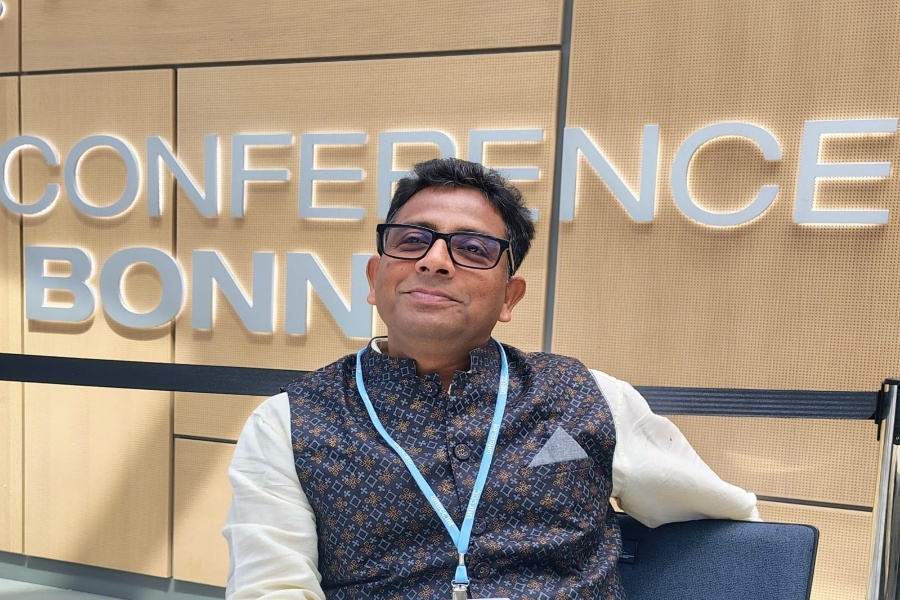
-Dr.Basudeb Bhattacharya, Assistant Professor, BirBikram Memorial College