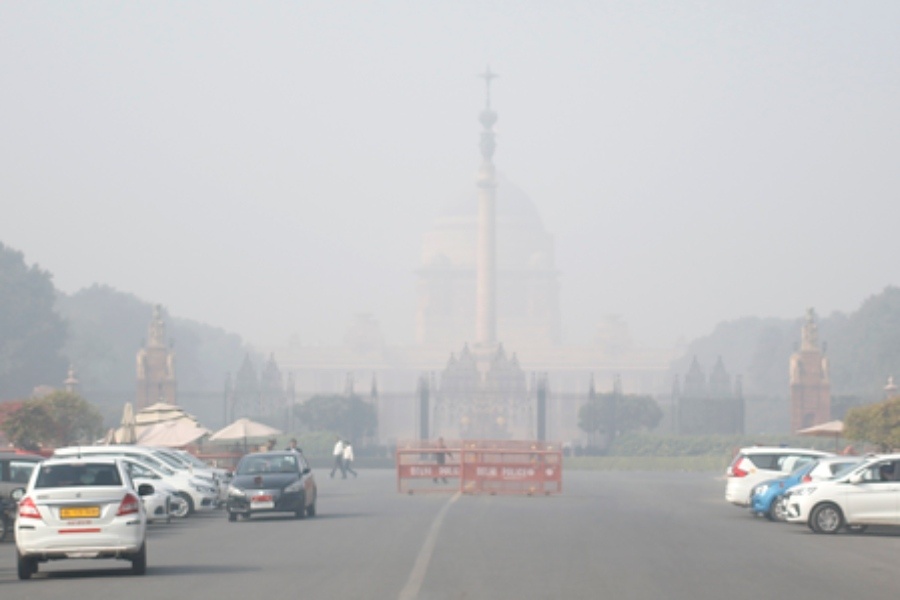
Delhi continued to face a double challenge of poor air quality and biting cold on Monday, with large parts of the national capital remaining under a cold wave. The minimum temperature dipped sharply, settling well below the seasonal average, intensifying winter discomfort across the region.
Air quality levels across the city largely stayed in the ‘poor’ category, according to data from the Central Pollution Control Board (CPCB). Several locations recorded AQI readings close to the upper end of the poor range, while multiple pollution hotspots slipped into the ‘very poor’ category. Areas such as Anand Vihar, Chandni Chowk, Ashok Vihar, Jahangirpuri and Nehru Nagar reported particularly high pollution levels, continuing their trend of severe air quality during winter months.
Neighbouring NCR cities also saw a decline in air conditions. Noida’s AQI worsened compared to previous days, while Gurugram, which had briefly seen improvement, slipped back into the ‘poor’ category over the weekend.
Although authorities had earlier withdrawn stringent measures under the Graded Response Action Plan (GRAP) following temporary improvement due to rainfall and strong winds, preventive restrictions under GRAP Stage 1 and Stage 2 remain in place to curb further deterioration.
As per official norms, AQI values between 201 and 300 fall under the ‘poor’ category, while readings above 300 are considered ‘very poor’ and pose higher health risks.
Meanwhile, the India Meteorological Department (IMD) has warned that cold wave conditions are likely to persist in isolated parts of Delhi until January 6. The weather department has predicted clear skies with shallow to moderate fog during morning hours, which may affect visibility and add to the chill factor.
Daytime temperatures in the capital are expected to hover between 17 and 19 degrees Celsius, while nighttime temperatures may range from 7 to 9 degrees Celsius. High humidity levels during early morning hours have further amplified the cold, making conditions feel harsher than the actual temperature.
IMD observations revealed variations in minimum temperatures across different localities, with some areas recording lower readings than others. Weather stations in Palam, Ayanagar and Safdarjung reported colder nights compared to the Ridge area, which remained relatively warmer.
The cold spell is not limited to Delhi alone. The IMD has forecast cold wave conditions in parts of Punjab, Haryana, Chandigarh, Rajasthan and Jammu and Kashmir over the coming days. Light rain or snowfall is also likely in isolated areas of higher altitudes in Kashmir, Himachal Pradesh and Uttarakhand.
In Kashmir, the region is currently witnessing ‘Chilla-e-Kalan’, the most severe phase of winter, marked by prolonged cold nights. However, the plains of the valley are yet to receive significant snowfall this season, according to weather officials.