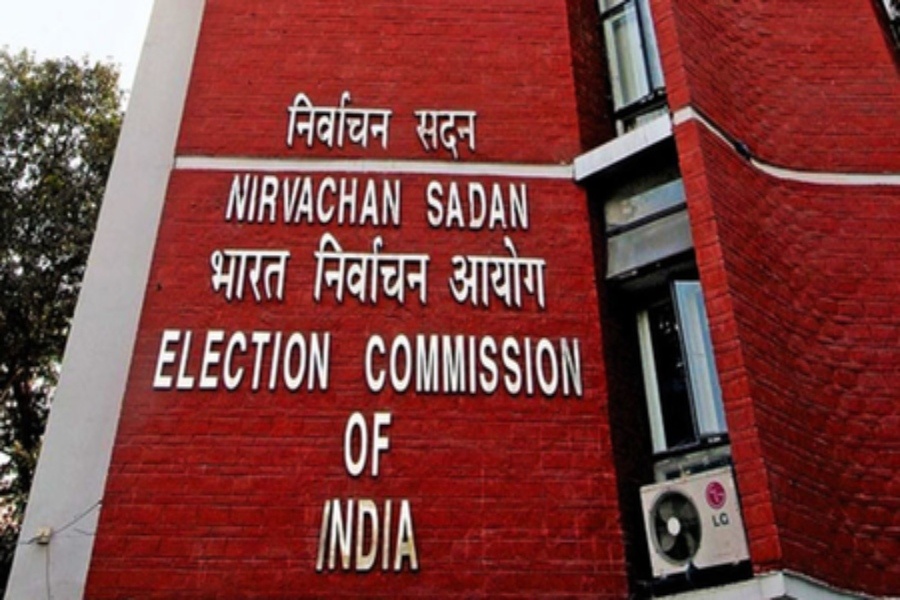
The Election Commission of India (ECI) will assess the history of election-related violence in West Bengal since 2014 to determine the scale and strategy of Central Armed Police Force (CAPF) deployment for the 2026 Assembly elections.
According to sources in the office of the Chief Electoral Officer (CEO), West Bengal, the Commission will examine violence records from seven elections held over the last decade. These include the Lok Sabha elections of 2014, 2019 and 2024; the state Assembly elections of 2016 and 2021; and the three-tier panchayat polls conducted in 2018 and 2023.
The ECI has directed the state election machinery to submit police station-wise reports detailing incidents of poll-related violence and casualty figures from each of these elections. In addition, the Commission has sought updated police station-level data on identified history-sheeters.
Based on this granular assessment, the ECI will decide both the number of CAPF companies required and their deployment pattern, with particular emphasis on sensitive areas and vulnerable polling booths, an official from the CEO’s office said.
The CAPF presence in the 2026 elections is expected to be significantly higher than in previous polls. This follows a recommendation from the CEO’s office suggesting that the upcoming Assembly elections be conducted in a single phase or, at most, two phases—compared to the seven or eight phases seen in recent elections.
The issue was recently discussed at a meeting at the ECI headquarters in New Delhi, chaired by Chief Election Commissioner Gyanesh Kumar and attended by Chief Electoral Officers from all poll-bound states and one Union Territory.
Officials noted that fewer polling phases could help curb the movement of political workers across constituencies, a practice often blamed for voter intimidation on or before polling day. However, they acknowledged that such a model would require substantial CAPF deployment, especially on the day of voting.
“If adequate forces can be ensured, conducting the election in one or two phases is entirely feasible,” a senior official said.
Meanwhile, the ongoing Special Intensive Revision (SIR) of electoral rolls in West Bengal is scheduled to conclude on February 14 with the publication of the final voters’ list. The ECI is expected to announce the election schedule soon after.